Love Doesn't Give Up on Addiction
You don't have to carry this alone.
Loving someone through addiction is exhausting and isolating. You can’t control their choices—but you can stop guessing about yours and take the next step with confidence.
Who are You Walking With?
You are Not Imagining It
Loving a son or daughter through addiction brings a grief few people understand.
You have replayed every decision you made as a parent. Whether they are seventeen and still at home or thirty-four and unreachable, the instinct to fix it is the same — and it is the one thing that has never worked. What does work is a prepared, specific option offered without a threat attached.
What isn't yours to carry
Their choices. Their sobriety. The timing. The guilt.
What you can carry forward
Clear boundaries. A prepared plan. One real option. Your own health.
What changes everything
Being ready with real help when they say yes.
Four practical steps you can take today
Stop making the addiction easier to sustain.
Money, rescue, and cover stories keep the current situation survivable. Naming one thing you will stop doing this week is a more honest act of love than another conversation.
Write down the offer before you make it.
Name one center, one phone number, one date. Specific offers get accepted; open-ended ones get postponed indefinitely.
Line up one other adult.
A spouse, a pastor, a sibling who will say the same thing you're saying. Alignment removes the wedge addiction always looks for.
Get your own support in place.
A family group at a nearby center, or a counselor of your own. You cannot carry a long season of crisis on urgency alone.
Questions Families Often Ask
Here are some of the questions families ask most often when they're trying to help someone they love
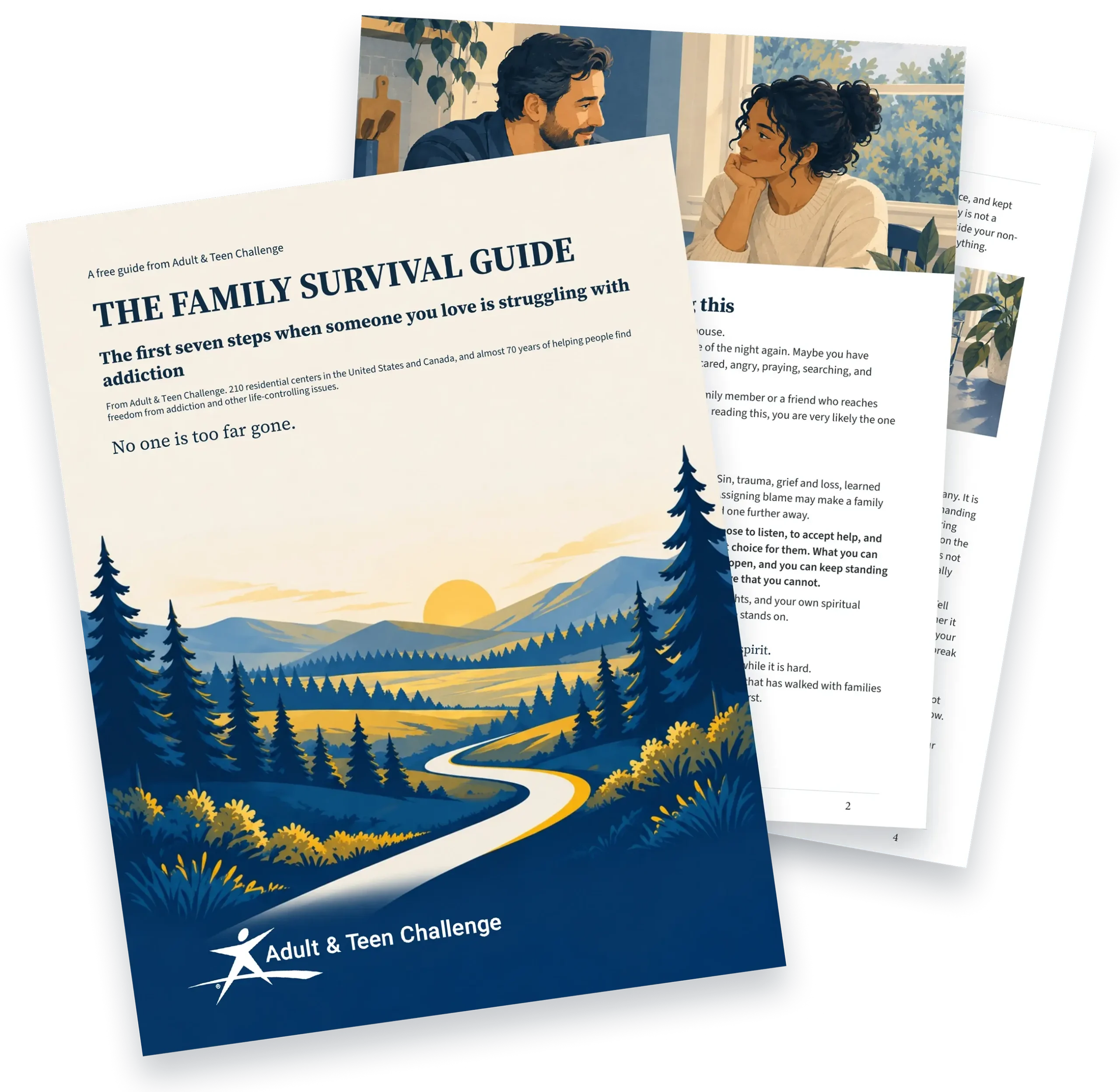
A Free Guide from ATC
Family Survival Guide
The first seven steps when someone you love is struggling with addiction.
Written with families who have been through it — the conversation scripts, the boundary language, and the checklist to have ready before the day they say yes.
Talk it through with someone who has walked with many families through the same week you're in.